
I was not clinically diagnosed with autism until 2020, some two months after my 60th birthday. If you are like me and you have recieved a late diagnosis of autism, what should you do?
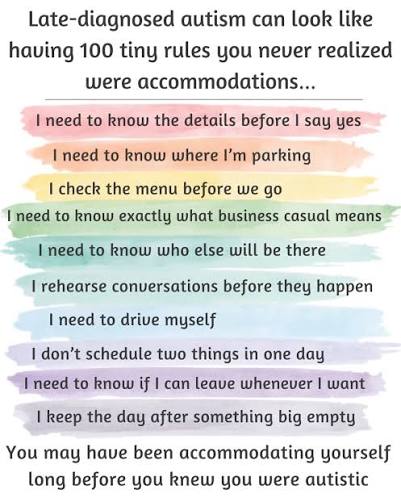
Give yourself the time and space to reflect:
Many adults experience a wave of self-discovery, relief, or even grief as they reflect upon their past choices. As noted by a consensus of users on Reditt, there is no single or mandatory timeline for what you must do next.
It should also be understood that ASD, (Autism Spectrum Disorder), does not present as a single, identical experience for everyone with this neurological condition. Autism is referred to as a spectrum disorder because it covers a wide range of symptoms, abilities, challenges, and support needs.
Accept who you are:
Autistic chatboards on Wrong Planet, Discord, and Reddit are filled with “I hate being autistic” posts. The anonymous nature of these boards allow users to vent their frustration with having to live as neurodiverse individuals in a world that was designed for neurotypicals.
The reality is that many of these forums act as emotional release valves. Users vent about their loneliness, complain in the aftermath of a meltodown, or express frustration after a job rejection. Many rail against their condition, often insisting that they “just want to be normal.”
Replying to these posts can feel like an exercise in futility. Unable or unwilling to accept constructive replies, most OPs will respond with a litany of reasons as to why these suggestions cannot be implemented.
Although venting can release negative energy, when used in excess, venting can also prolong anger and despair. When venting on a chatboard, the entire board has the potential to become a vast echo chamber in which other negative posts can validate and prolong each person’s self-imposed misery.
I have long since stopped visiting these communities because too many of them were filled with doom and gloom. People who had complained about being unemployed largely didn’t want advice about skills training or tips on how to interview. They wanted enabling validation about how unfair the world was and how neurotypical systems are built to suppress opportunities for neurodiverse employment.
My personal feeling about all such venting is that at the end of the metaphorical day, each of us has to confront our own lives. If you are happy with your life as it is and see no point in making any changes, then so much the better. You deserve respect and congratulations for having lived your life on your terms even if you spent many years without having precisely known why you were the way you are.
In contrast, people who are unhappy over the quality of their lives have two choices. They may either continue to be sorry for themselves or they may apply themselves towards improving their lives by developing viable workarounds to compensate for each weakness.
Learn about neurodiversity:
In 1597, Sir Francis Bacon Bacon wrote “Ipsa scientia potestas est” (meaning “knowledge itself is power”) in his work Meditationes Sacrae.
When applied to autism, the best way to understand one’s condition is to learn about it. Research your specific autism traits such as your sensory sensitivities, level social awkwardness, and abilities for executive functioning.
The more you learn about these traits, the better you’ll be able to understand who you are and what you might do to improve the quality of your life.
Find a community:
Use the internet to seek out neurodivergent-led spaces, online forums, or local organizations for validation, support, growth opportunities, and peer connection.
Unable to find any such community, I once had a wordpress blog, “Life with Autism”. I eventually discontinued (and deleted) this blog because the vast majority of visitors were people who never posted a comment. Although I am told that this blog became one of the leading sites that search engines would refer users to after having searched for having received a late diagnosis of autism; posting at this blog soon felt like an unwanted obligation.
As my new posts became less frequent, I eventually decided to delete the site partially because some of my last posts were negative having addressed issues with my last days of employment as a teacher.
Instead of deleting the posts in question, I decided to delete the entire site; choosing instead to focus my energy on constructive endeavors such as writing books about autism.


Consider disclosure and accommodations:
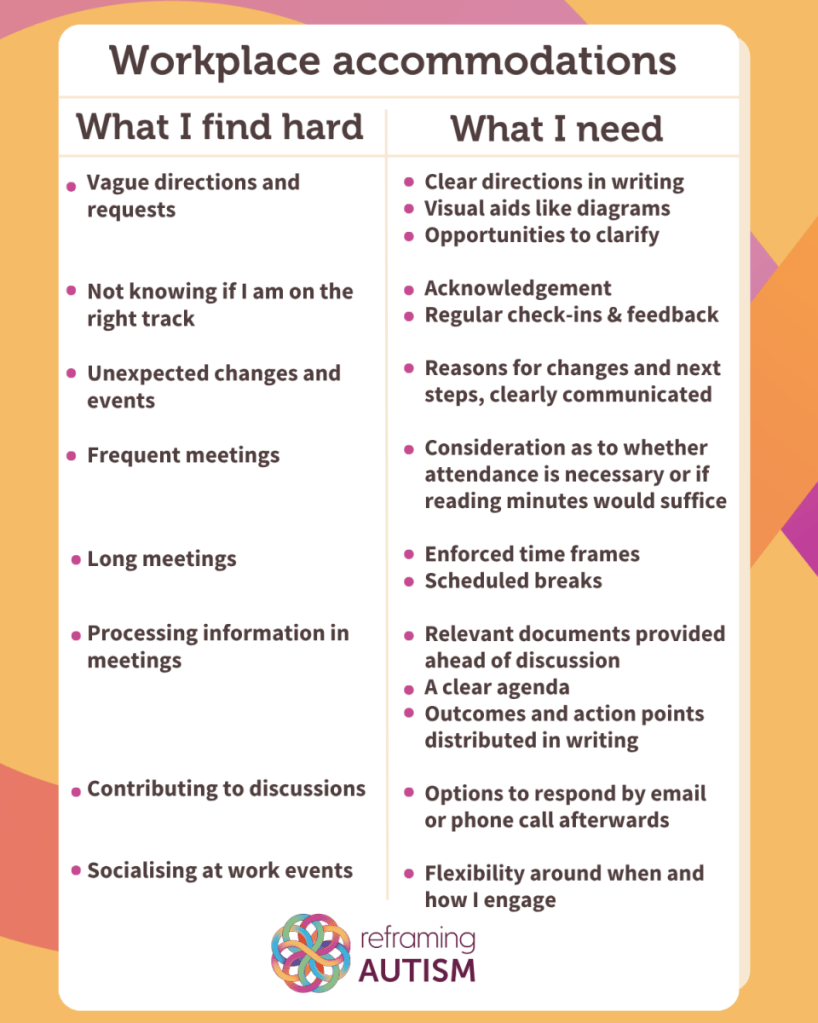
In the United States, workplace accommodations (like quiet workspaces or written instructions) fall under Federal disability rights that include the Americans with Disabilities Act (ADA).
Deciding who to tell at work or in one’s daily life is a personal choice. One issue that everyone has faced has been how you will be treated after you have disclosed your condition.
I myself was somewhat annoyed when a cousin dismissively said, “What do you mean that you just learned that you’re autistic? I’ve known that you were autistic for years.”
This relative went on to explain that he’s had many friends who were on the spectrum and that he had somehow assumed that I had known about my condition.
Connect with autism-informed healthcare:
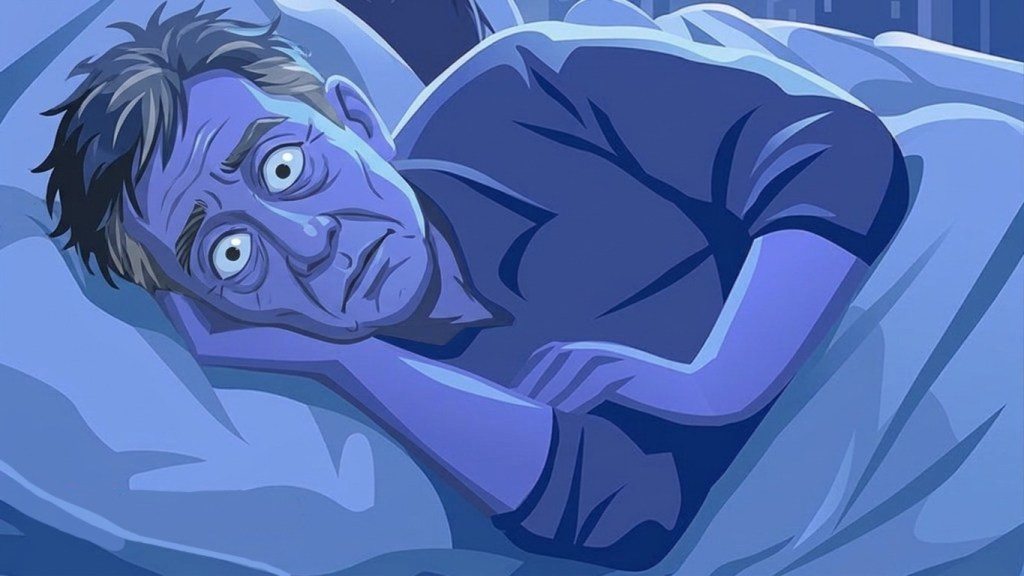
Find medical and mental health providers who understand neurodivergence to help manage co-occurring conditions like anxiety, sleep disturbances, or sensory overload.
What I did with my autism diagnosis:
After having received a clinical diagnosis of autism, I contacted my building administrators as well as the district. My district office had an office that was called, “Compliance and Accommodations”. The C&A office was formed to protect the rights of students (and employees) with disabilities to ensure that our rights were followed under state and Federal laws.
My building administration was incredibly supportive. Within 24 hours, they issued the following workplace accommodations:
- Although teachers were expected to attend local games or to volunteer to work at the concession stand, no such expectations allowed to me.
- I was excused from having to chaperone proms.
- I was excused from attending (loud and noisy) assemblies.
- If I was to have a strong disagreement with a colleague, instead of expecting colleagues to “work it out”, admin promised to mediate.
What did you do after learning that you were autistic?



Leave a Reply