
According to a study from King’s College in the United Kingdom, an estimated 90% of people who are middle aged or older have never been evaluated for autism.
Although this disorder is now often part of a pediatric evaluation in the United States, autism was not recognized as a valid diagnosis by the DSM (Diagnostic and Statistical Manual of Mental Disorders) until 1980. Pediatric doctors did not begin to actively screen for autism within the United States until 2006, after the American Academy of Pediatrics recommended screening for autism as a medical best practice.
As a result of this history, a lot of U.S. citizens; especially those who are 46 and older, remain undiagnosed.

I was a teacher for 32 years.
In October of 2018 while working as a Culinary Arts instructor at a high school in the greater Las Vegas area, a special education teacher gave me an IEP for a new student.

As with all students who have an IEP, I read the file so that I would know what accommodations I would need to provide. In the United States, over half of all special needs students have learning disabilities such as dyslexia or ADHD. Other students have speech or language impairments.
I froze after opening the IEP folder. The student in question had autism. Over the five years I had previously worked as a Culinary Arts instructor as well as the seventeen years I had been an elementary teacher; I had never before had a student with an IEP for autism.
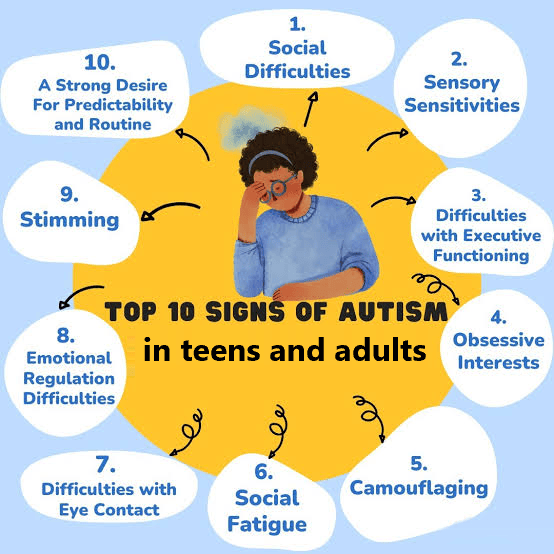
When I googled “autism”, I found a list of symptoms that I found myself relating to.
- Social Difficulties – People with autism often have problems with understanding tones of voice, reading body language and facial expressions, and understanding sarcasm. They may speak too loudly or softly. They may talk at length about an obsessive interest.
- Senory Sensitivities – The neurodiverse may be hypersenstive to noise such as a humming refrigerator, ticking clock, or the buzz from fluorescent light. Many people find overlapping conversations to be challenging to filter out. Some may find such noise to be physically painful. Bright lights, temperature extremes, strong aromas, and the seasoning and texture of food can also be problematic.
- Difficulties with Executive Functioning – Executive function is the ability to manage every day tasks.
- Obsessive Interests – Obsessive interests in autism—more commonly referred to by psychologists and autistic advocates as special interests or restricted and repetitive interests—are deep, intense fascinations with specific topics, objects, or activities.
- Camouflaging – Also known as “masking”, this is the ability by many people with autism, especially those who have been long undiagnosed, to adopt neurotypical mannerisms while also suppressing autistic tells so as to better “blend in”.
- Social Fatigue – Social fatigue in autism is a deep state of physical, cognitive, and emotional exhaustion that is triggered by the heavy emotional cost of having to interact with others. Neurodiverse individuals who have reached the limits of what they can endure, need quiet alone time to rest and recover.
- Difficulties with Eye Contact – People with autism spectrum disorder (ASD) often avoid eye contact not out of disinterest or rudeness, but because direct eye contact can be overstimulating, stressful, and cognitively exhausting.
- Emotional Regulation Difficulties – Emotional regulation is the ability to monitor, evaluate, and modify one’s emotional reactions in response to internal or external events. People who temporarily lose this ability due to social fatigue are at risk of having a meltdown; a total loss of emotional restraint.
- Stimming – short for self-stimulatory behavior—stimming refers to repetitive body movements, sounds, or object maniupations that help with providing emotional regulation. While everyone stims (such as tapping a pen or bouncing a leg), autistic stimming tends to occur more frequently, intensely, and for longer durations to manage sensory input and emotions.
- A Strong Desire for Predictability and Routine – People on the autism spectrum often prefer set routines and schedules because they provide a sense of safety and predictability which then facilitate this person’s ability to transition between one activity or event to another. Since the world can often feel chaotic, sensory-heavy, or unpredictable, knowing what is going to happen next removes the stress of guessing or having to brace for a surprise.
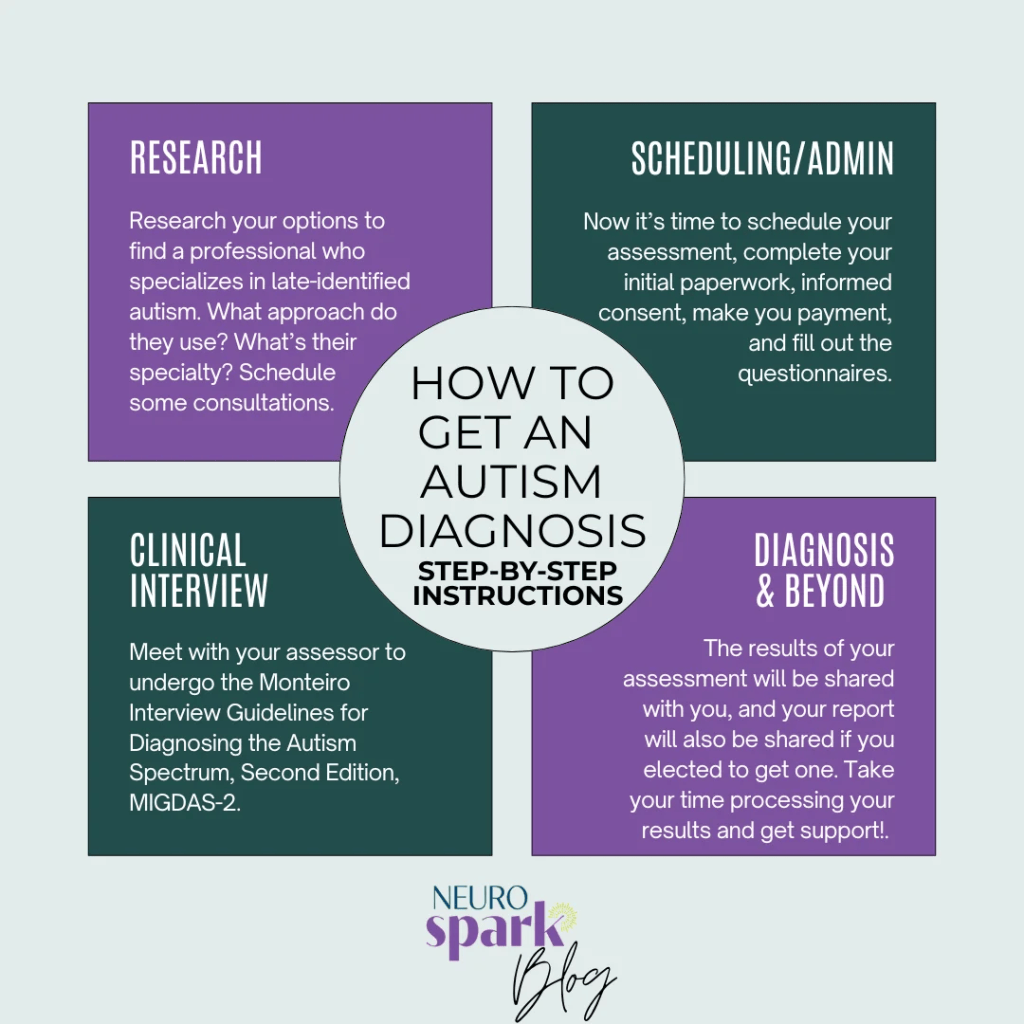
What happened next
I subsequently found a website that offered free on-line testing for autism. Please note while these tests are useful in determining whether or not one might be autistic; they are NOT conclusive because there are other conditions such as ADHD, OCD, social anxiety disorder, schizophrenia, and bipolar disorder; all of which share symptoms that overlap with those of autism.
The only way to be sure that one is autistic is to seek a clinical diagnosis through a licensed psychologist, psychiatrist, or neurologist. Young children may also be screened through a developmental pediatrician.
Since most healthcare providers who screen for autism are pediatricians, it can be challenging to find someone who works with adults. In my case, it took a year to find a psychologist who would work with me. Since my healthcare coverage viewed the cost of such testing as being for a “preexisting condtition,” they declined to cover the $1,300 which then became an out of pocket expense.
I underwent a four hour evaluation for autism on December 19, 2019. Although the diagnostician was kind enough to confirm that I had autism after having completed the evaluation, it would not be until April 20, 2020 that I would receive a written diagnosis.
What’s your story? How did you come to be diagnosed with autism?



Leave a Reply