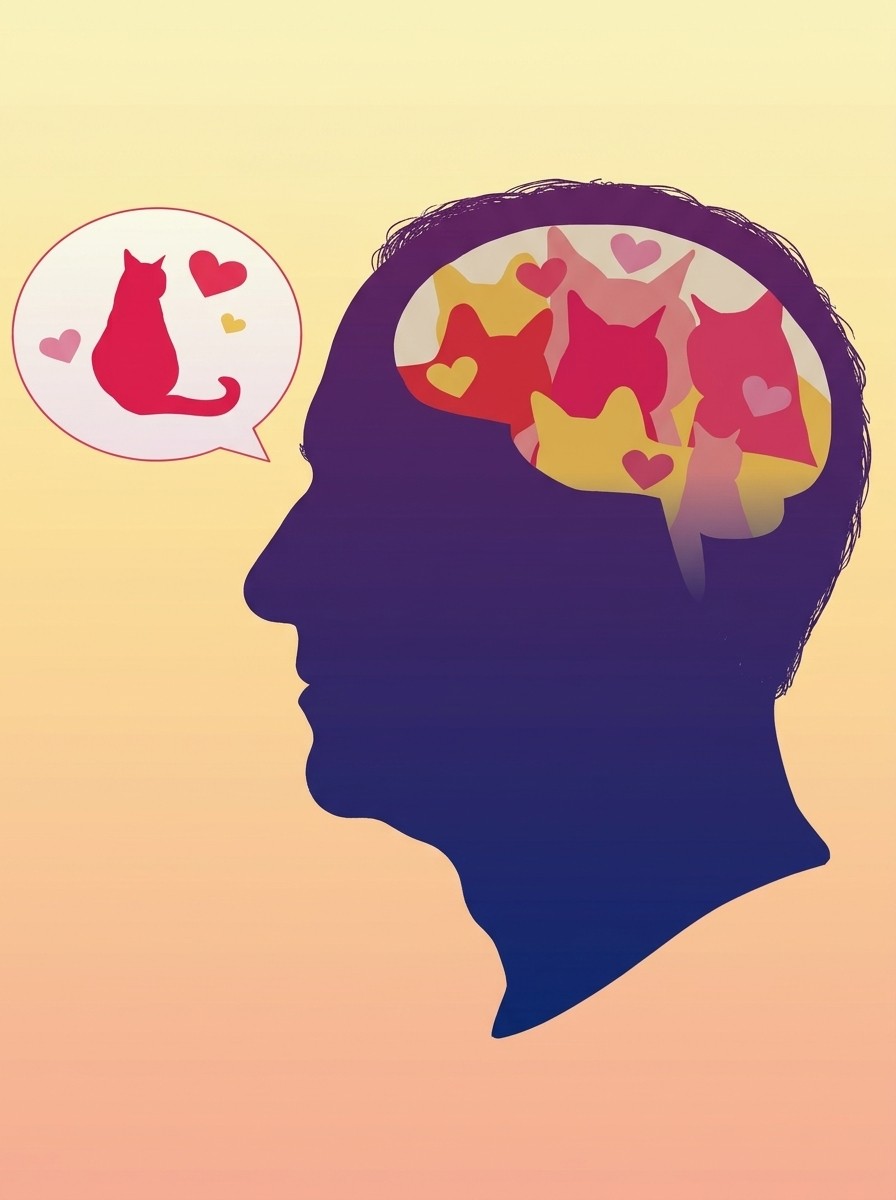
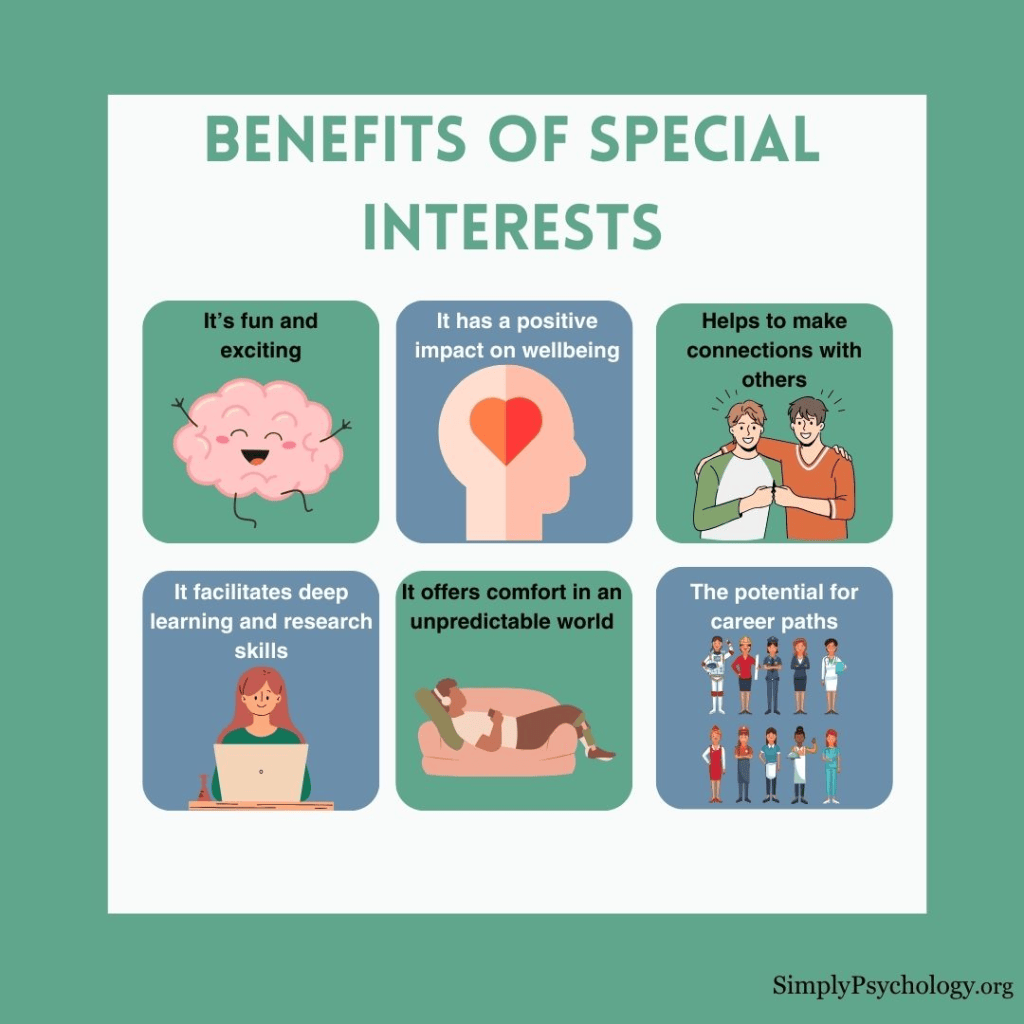
According to the National Autistic Society, “Special interests are intense, deeply focused passions for specific topics, objects, or activities that go beyond typical hobbies.” They are important to neurodivergent people because they support emotional regulation, provide stress relief, offer opportunities for learning, create a sense of self-identity, and even offer the possibility of a career pathway.
Studies generally estimate that roughly 65% to 95% of people with autism have at least one special interest, with most research clustering between 75% and 90%.
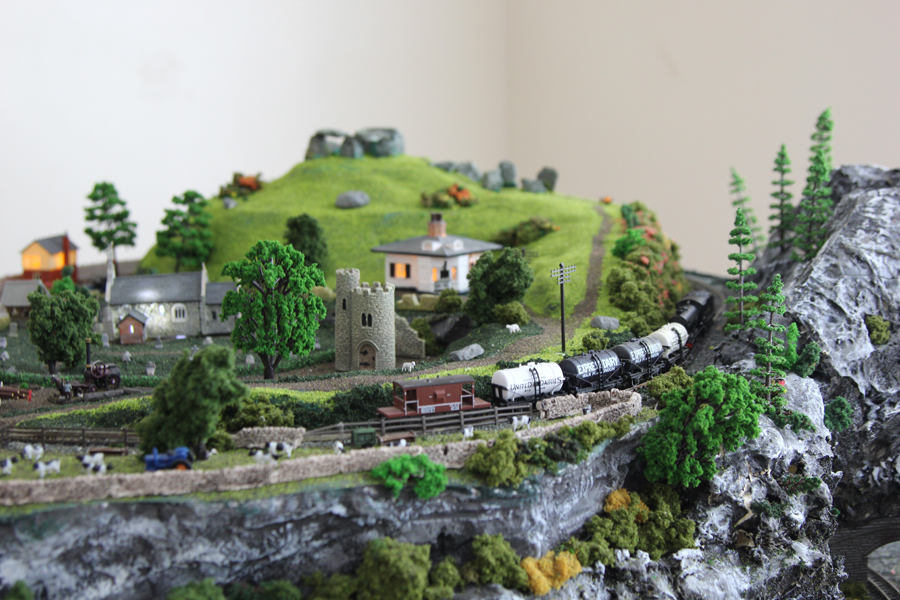
For example, many people on the autistic spectrum have a special interest in model train sets. Unlike real-world environments that can feel chaotic or overwhelming, a model railway is a self-contained world where every rule, schedule, and piece of scenery works in a logical, repeatable way.
Since many of us have detail oriented minds, the intricacy of these trains and the layout of tracks and model communities appeal to our sense of order. Our senses are soothed by the rhythmic motion of rotating wheels. The steady movement of a train that follows a fixed line provides consistent visual and tactile patterns. Sound-equipped model trains produce repeatable noises that can include the rumbling sound of chuffing engines with accompanying bells or horns; all of which can be adjusted in volume depending upon one’s sensory needs.
I myself used to have a n-scale model train set, though I lost interest at 14 years of age after my father criticized and eventually forbade my use of papier-mâché to create rolling hills for my train set. What particularly galls me is that my father never explained why he made this decision. He simply folded his arms across his chest and growled, “My house, my rules.” (Sigh).
Emotional Regulation
A special interest can make an autistic person happy. Immersion in this interest gives this person some much needed time to relax which can then reduce stress levels. Participation in a familiar passion can help with preventing burnout. Developing expertise and mastery in one’s interest can support the development of self-esteem and emotional resilience. It can also provide a conversation talking point with other people.
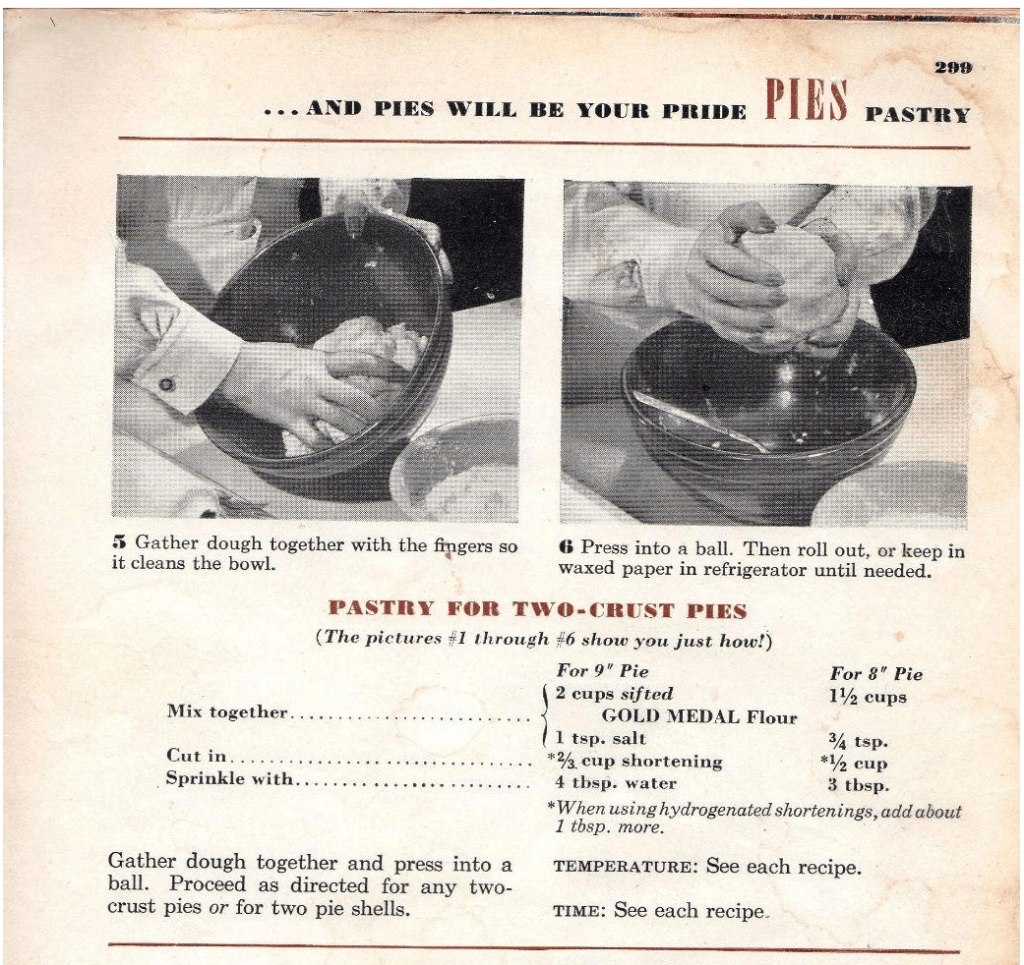
After my father forbade my use of papier-mâché in building a model train set, I developed an initial interest in baking that eventually led to an enthusiasm for all things culinary. With my father’s permission (and against my mother’s protests which alleged that I might burn the kitchen down), I used a Betty Crocker cookbook to teach myself how to bake pies, cookies, cinnamon rolls, and biscuits.
Stress Relief
Unlike unpredictable social or sensory environments, a special interest often follows clear rules and patterns; all of which help to reduce anxiety. According to a 2024 study published by the British Educational Research Association), 74% of autistic respondents prefer to focus on a single activity for extended periods.
Known by many as either “hyperfocus” or “hyperfixation,” this is a condition that describes a state of deep, prolonged, and intense concentration for a specific topic, task, or activity; often to the point where outside stimuli and other needs fade into the background.
I created a satirical video about this on YouTube for a now defunct channel about an autistic character named “Jasper Spectrum”.
Learning
Driven by genuine curiosity, autistic individuals often teach themselves how to gather, verify, and organize complex information. Collecting, studying, and learning about one’s interest(s) can build strong analytical and logical reasoning skills.
A special interest can also make otherwise difficult subjects accessible—for example, learning math through train transit timetables, history through costume design, or reading comprehension through a love of science fiction.
Self-Identity
An autistic special interest can often anchor a person’s sense of self; turning deep curiosity and expertise into a core part of “who I am”.
Sharing this passion with others can build a sense of community around shared curiosity rather than rigid social norms. By connecting with others who have shared interests, isolation can be replaced with a sense of belonging.
For example, before the advent of computer wargaming, I was an advid Napoleonics gamer throughout my twenties. In addition to hand painting miniatures, I often met with other gamers to spend hours recreating and fighting famous Napoleonic battles.
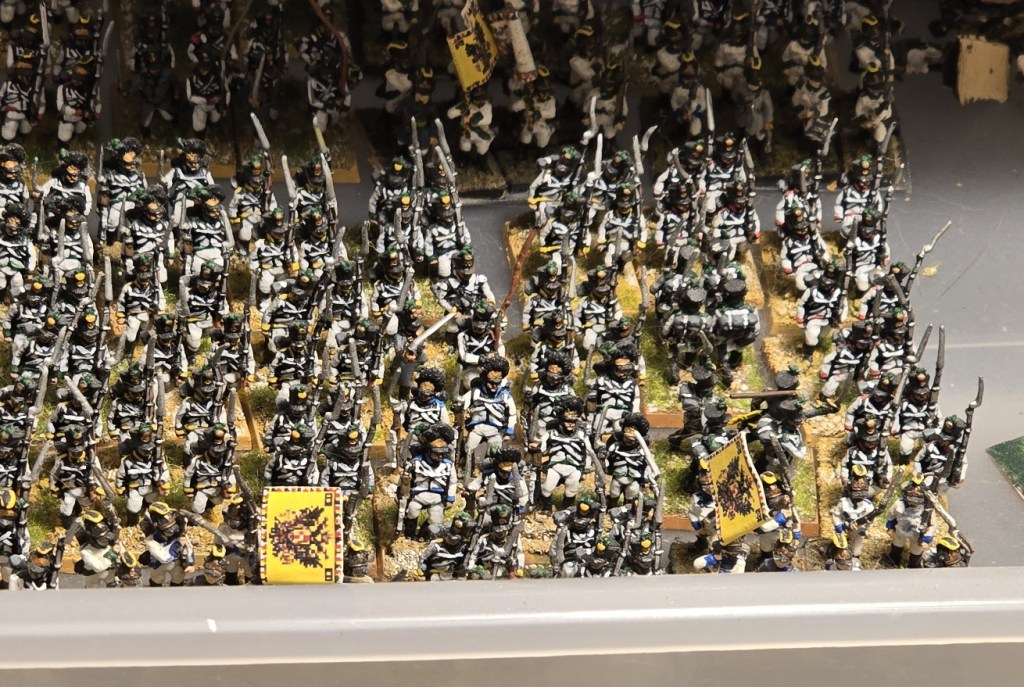
Given my prior interest in Culinary Arts, at one time I could speak at length about quartermaster culinary provisions for Napoleonic era soldiers
For example, while all armies relied heavily on a diet of bread and meat, the Austrians issued slightly larger paper allowances of meat and bread because they had well established supply depots and logistic trains. In contrast, the French depended heavily upon foraging (“living off the land” i.e. looting). French provisions also included wine and brandy in their standard issue.
Career Pathways
During the latter part of my 32 year long teaching career, my long time interest in all things culinary led me to attend culinary school just after my 40th birthday. After having graduated with honors and after having spent 4 years working in the food service and hospitality management industry, I leveraged my training and prior work experience to earn provisional certification as a culinary arts instructor.
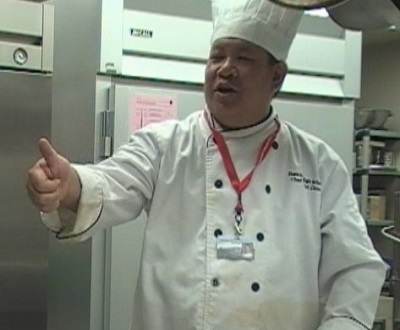
For 15 years my students and most of my colleagues, called me “Chef”. My self-identity as a chef instructor was so much part and parcel with my occupation, that my professional wardrobe consisted of black non-skid kitchen safe shoes, black socks, black trousers, and blue polo shirts with the embroidered label, “CTE Culinary Arts) on the upper right chest.
At work, I’d slip off the shirt to replace it with a white culinary jacket. I also wore a white toque.
Do you have one or more special interests? What are they? Please share your thoughts in the comments.


Leave a Reply