Why I Decided to Teach Abroad
The start of the 1990-1991 school year found me emotionally drained. By this time I had been working for 8 years as a 4th grade elementary teacher in south Texas. I had also taken a year off to earn a Master’s degree in Curriculum and Instruction.
The cost of a monthly mortgage for a starter home as well as graduate student loans had forced me to take on two part-time jobs. During the school year, my day began at 6:30 AM when I reported to my district’s bus barn. I drove a bus before and after school, taught throughout the school day, and then worked as a night instructor for an adult education program. If I was lucky, my workday would end at 10:30 PM.
With weekends spent running chores, grading papers, recording grades, and writing lesson plans; the thought of another decade that would have to be spent working these long hours made me want to scream in frustration.
Since my father had been in government service and I had spent my childhood in Ghana, Thailand, and El Salvador, I knew that there were American schools abroad. At the very least, living abroad would allow me to rent out my home. Depending upon where the school was, the cost of living and local taxes could be lower than that of living in the United States. In December of 1990, I attended an ISS (International Schools’ Service) job fair in New Orleans to teach abroad.
I was fortunate to receive multiple offers from schools in Taiwan, Peru, Columbia, and Saudi Arabia. Since the Saudi Aramco Oil Company in Dhahran, Saudi Arabia offered $78,000 in tax free income with subsidized housing, free utilities, a 401K plan, and an annual vacation allowance that would kick my gross salary up to $84,000; I took a 3rd grade teaching job in Saudi Arabia.
Little did I know that the 8 years I would spend in the Middle East would be punctuated by two wars and a terrorist attack.
Operation Desert Shield
I arrived in Dhahran, Saudi Arabia in September of 1990 during Operation Desert Shield. Desert Shield was a united coalition military response to the Iraqi invasion of Kuwait on August 2 of that year.
The coalition began with the 82nd Airborne who were boots on the ground in Saudi Arabia by August 7, 1990. Over the course of several months, 32 countries sent military forces to Saudi Arabia. Another 10 provided logistical, medical, and financial support.
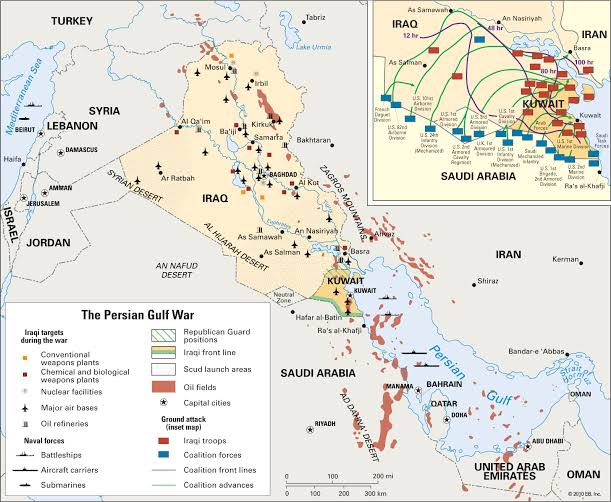
Over the 163 days that Desert Shield lasted, nearly 700,000 soldiers (most of whom were American) arrived in Saudi Arabia. Air missions over Kuwait and Iraq were launched from aircraft carriers in the Persian Gulf as well as from airfields throughout Saudi Arabia. The constant rumbling whoosh-whoosh of jet aircraft passing overhead seemed to go on throughout the clock.
The Iraqis responded by launch scud missiles at Dhahran. Not only was Dhahran the corporate headquarters of the Saudi Aramco Oil Company but vast supply depots as well as a huge coalition air force base were located just outside our corporate community.
Per corporate policy, whenever the civil defense sirens went off, we had to shelter in place. During the school day, my 3rd grade students sheltered under their desks with poison gas masks at hand. To quiet their fears, I read stories to them throughout each alert.
At home in a one bedroom condo, I sheltered inside a walk-in closet under the stairs that led to my upstairs bedroom.
On January 17, 1991, Operation Desert Storm began. The First Gulf War ended 42 days later after Kuwait was liberated and southern Iraq was invaded.
The Bombing of Khobar Towers
I was asleep in my split-level one bedroom condo on Mango Circle in Dhahran, Saudi Arabia, when a loud sound startled me awake. It was nearly 10 PM on the evening of Tuesday, June 25, 1996. The sound had been too loud to have been thunder. The noise had sounded as though someone had dropped a load of cinderblocks onto the roof of my home.
I rolled out of bed and peered through the mini-blinds. Despite the lateness of the hour, lights were coming on throughout many of the surrounding condos. Although I was a teacher at an American school with the Saudi Aramco Oil Company, most of my neighbors were medical personnel who worked at the corporate hospital. As I watched, men and women in medical scrubs emerged from their homes and ran for their cars.
It would not be until the following monring, just before school was scheduled to start at Dhahran Hills Elementary, that the principal called for an emergency faculty meeting. At the meeting, we were told that the U.S. military base at Khobar Towers had been attacked by a terrorist truck bomb. Since our corporate hospital was the largest and best equipped medical facility in the area, all medical shifts had been called in to triage and treat in-coming casualties. Patients who were stablizied were subsequently airlifted to Germany.
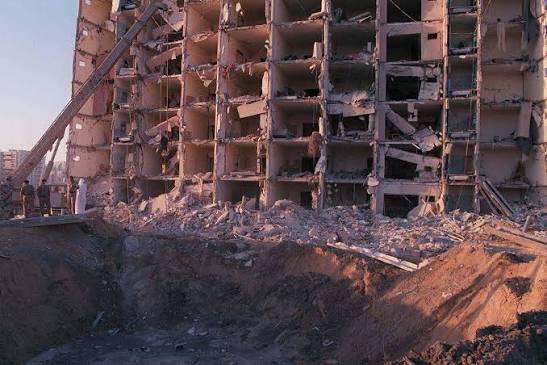
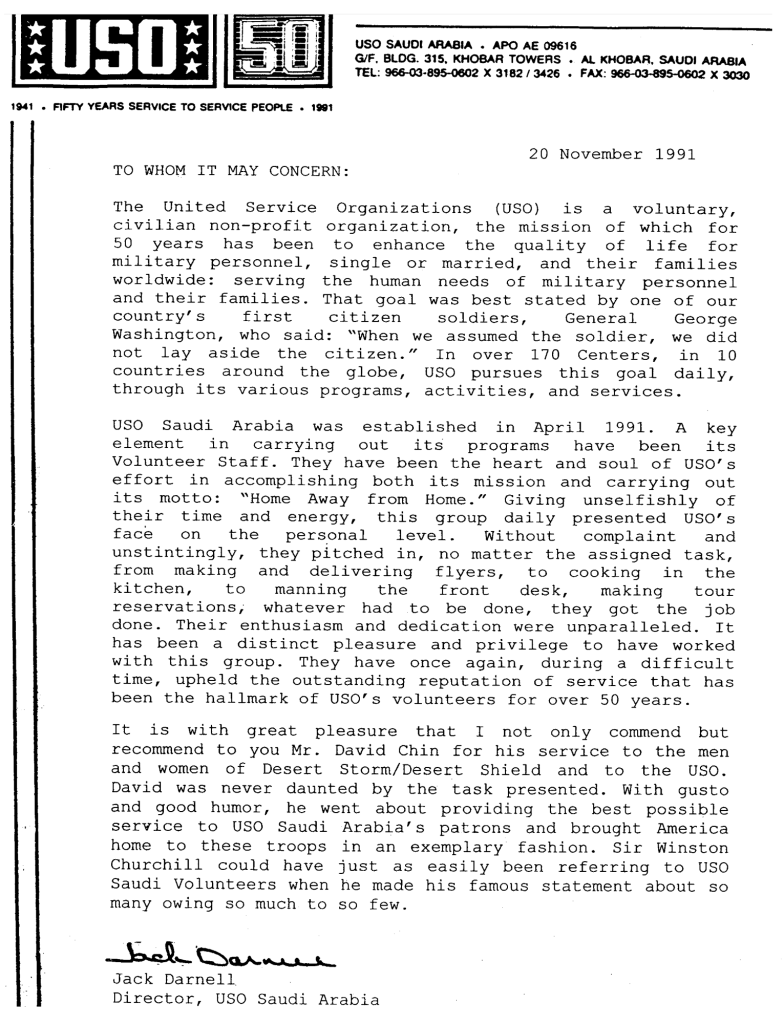
The bombing of Khobar Towers hit me hard because I had known several of the U.S. Airforce personnel who had been at the base. Our relationship began in 1991 when I was a volunteer USO baker. Once each Thursday (which was the Saudi equivalent of Saturday), I would buy a hundred dollars worth of baking supplies. I would then go to the USO at Khobar Towers where I would bake chocolate chip, oatmeal, and peanutbutter cookies until I used all of the supplies.
After force reductions drew down the number of U.S. troops in and around Dhahran, most of the volunteers for the USO became part of a U.S. Air Force Morale Unit. The bombing of Khobar Towers ended all civilian visitors to this base. To this day, I don’t know how many of the U.S. personnel who had once eaten my cookies were part of the 19 who died and the 372 who were wounded.
The Bombing of Beirut
On the evening of June 24 and proceeding into the early morning hours of June 25, the Israeli Air Force bombed Beirut. Israeli Prime Minister Benjamin Netanyahu authorized the raids in retaliation for Hezbollah Katyusha rocket barrages that had been fired into northern Israel. The Israelis attacked two power stations, a cell phone relay center, and two bridges.
As with the bombing of Khobar Towers, I awoke to the sound of explosions. Having left Saudi Aramco in September of 1997 and having taken a job as a 3rd grade teacher at the American Community School of Beirut, I rolled out of bed in my faculty apartment and crawled under the shelter of a heavy wooden desk.
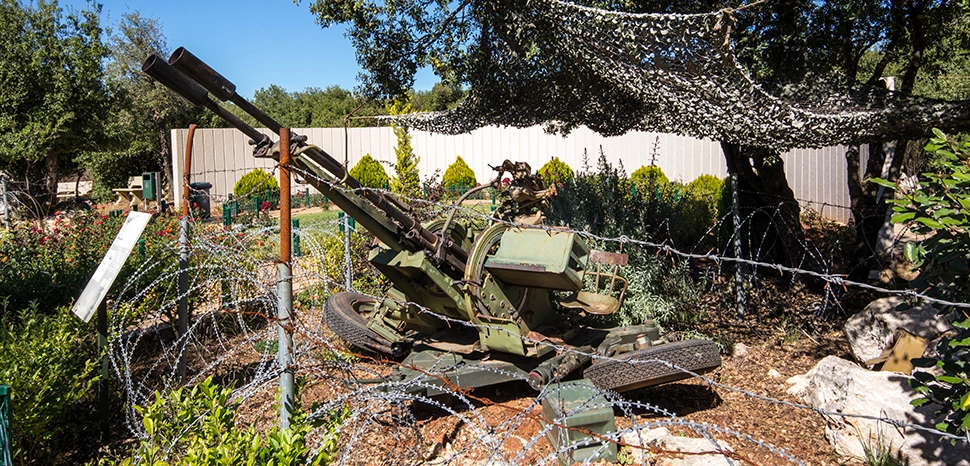
When I looked out the window from under the desk, I could see orange tracer fire rising from a sandbagged twin-barreled anti-aircraft gun that was just one block away. From time to time, the entire building shook as low flying Israeli aircraft raced overhead. I could hear explosions in the distance and the wail of first responder fire and ambulance units.
In the morning, the only faculty who reported to work were expatriate teachers from a half dozen countries including the United States, Canada, the United Kingdom, and New Zealand. Since the 1998-1999 school year had literally ended the previous day, there were no students.
After the office staff and building admin failed to show up, we walked one block towards the Corniche, the broad avenue that parellels the Mediterranean Sea. At a bistro that had a limited menu due to a power outage, we had hot sweet tea, man’oushe (a charred flatbread topped with za’atar (herbs, sumac, and sesame seeds) that had been cooked over a wood fire, and day old baklava.
When the international airport opened a few days later, I left Beirut and never returned despite having been on a two year contract.
Post Traumatic Stress Disorder (PTSD)
I was visiting a friend in North Carlina when I belated realized that I had PTSD. I had been shopping for groceries when I was caught in a rainstorm. At the crack of thunder, I found myself lying face down in the parking lot with my groceries strewn around me. “IN-COMING!” I was shouting.
Some unkind people laughed at me. I was so embarrassed that I drove away without having bothered to salvage any of the food.

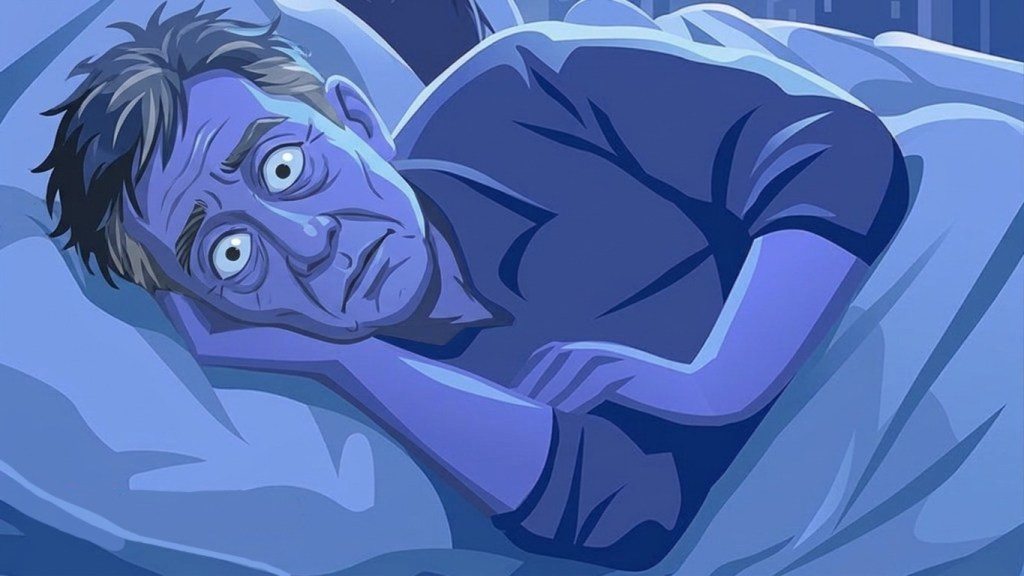
I subsequently made an appointment with a primary care physician who gave me a referral for a psychiatrist. The psychiatrist listened as I told him about the scud missile alerts in Saudi Arabia, the bombing of Khobar Towers, and the bombing of Beirut. When he asked me about how I was sleeping, I reluctantly told him that I had developed insomnia. Since I had woken screaming from several nightmares, I had become fearful of going to bed.
The doctor concluded that I had PTSD. When I protested that I had never been in the military, he gently observed that PTSD was a mental health condition that was triggered by memories of having witnessed or experienced a terrifying life-threatening event. He further theorized that so long as I had remained in the Middle East, I had kept my mental guard up. After having returned home to the United States, I had let my guard down, and the crash of thunder had caused a vivid PTSD flashback.
I was put on medication (Prozac) and had weekly sessions to “talk out” my fears. Since I was single with no family in the area and since I had also decided to take a gap year from teaching, the doctor suggested that I get a pet so that I would have a reason to get out of bed.
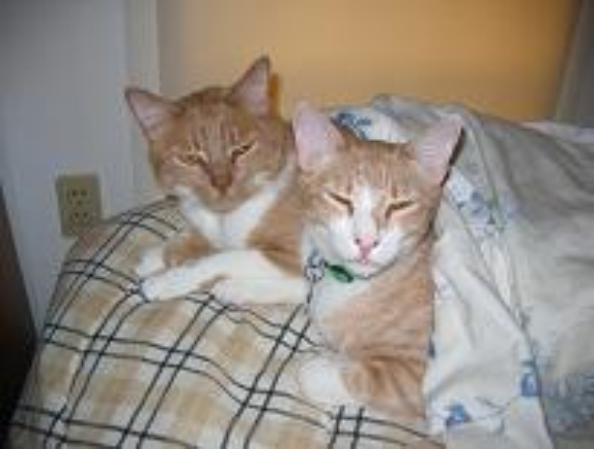
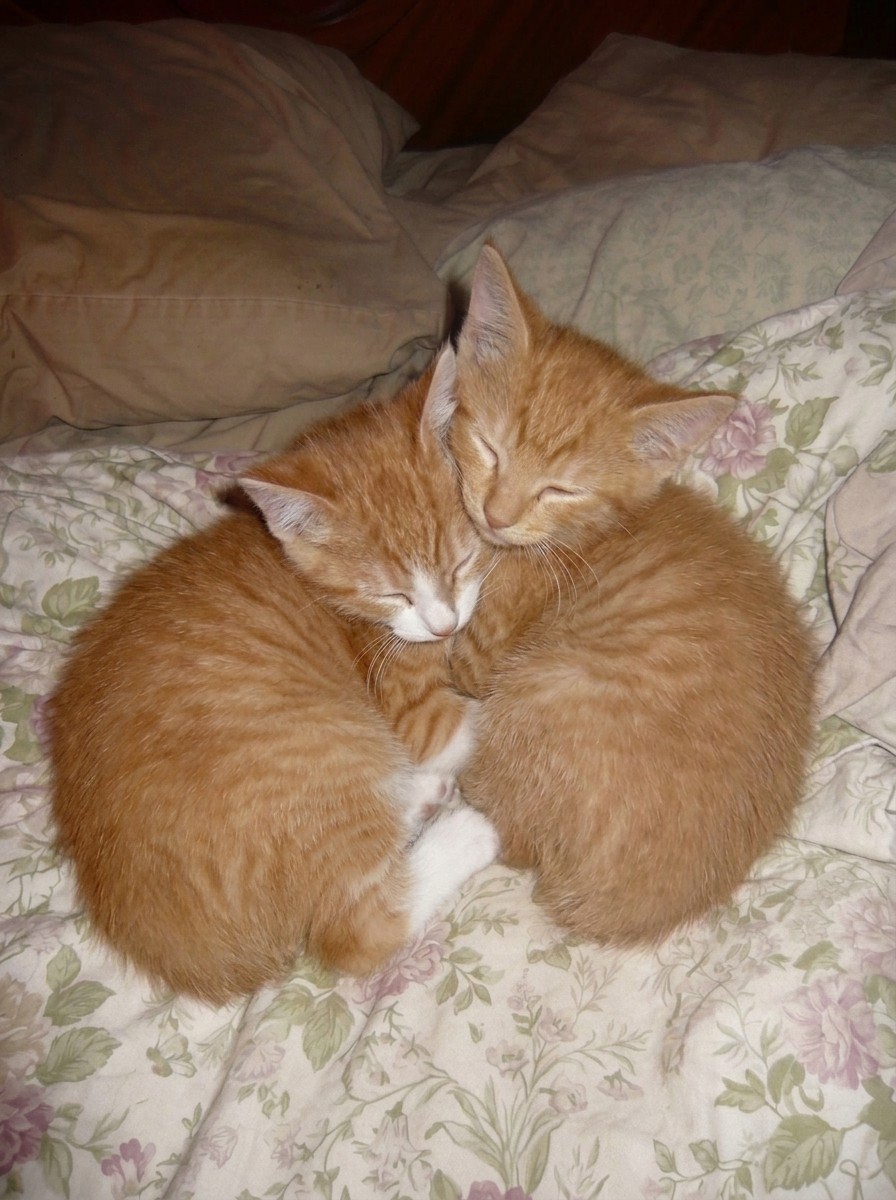
I went to a PetsMart with the literal intention of giving lip service to the doctor’s instruction. Although I had entered this store with the thought of getting a gold fish bowl and gold fish; I found myself captivated by the appearance of two Manx-mix kittens.
Although I initally only wanted Jasper whose fluffy and plump appearance made him look like a particularly cute stuffed animal, his timid nature made me also adopt his much braver brother.
Instead of walking out of the store with a minimum amount of aquarium supplies, I left with a cat tree, two litter boxes, a brush, food bowls, kitty litter, cat kibble, canned food, treats, and a lot of toys.
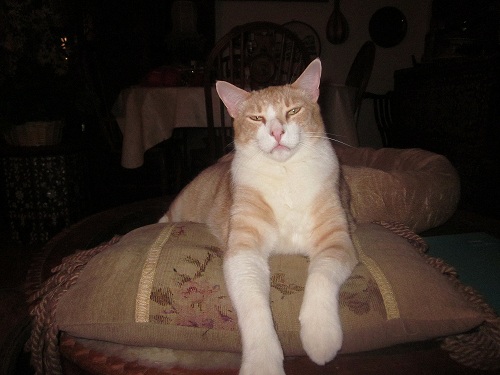
Looking back upon my life with the benefit of hindsight, words cannot adequately express how very grateful I am to Bob and Jasper.
In learning to care for them, I learned how to read non-verbal cues by observing their ear positions, Jasper’s stub tail movement, and body posture. Understanding cat behavior informed me as to when these cats wanted attention and when they needed their own personal space.
Since cats like routines, predictable schedules such as playtime, feeding, and cleaning the litterbox dovetailed nicely into my own need for daily schedules even though it would still be many years until I realized that I was autistic.
Paying attention to a cat’s sensitivity to loud noises and sudden movement reinforced my understanding of sensory triggers. In addition, stroking the soft fur of a purring cat provided a soothing tactile input that helped me regulate my own stress.
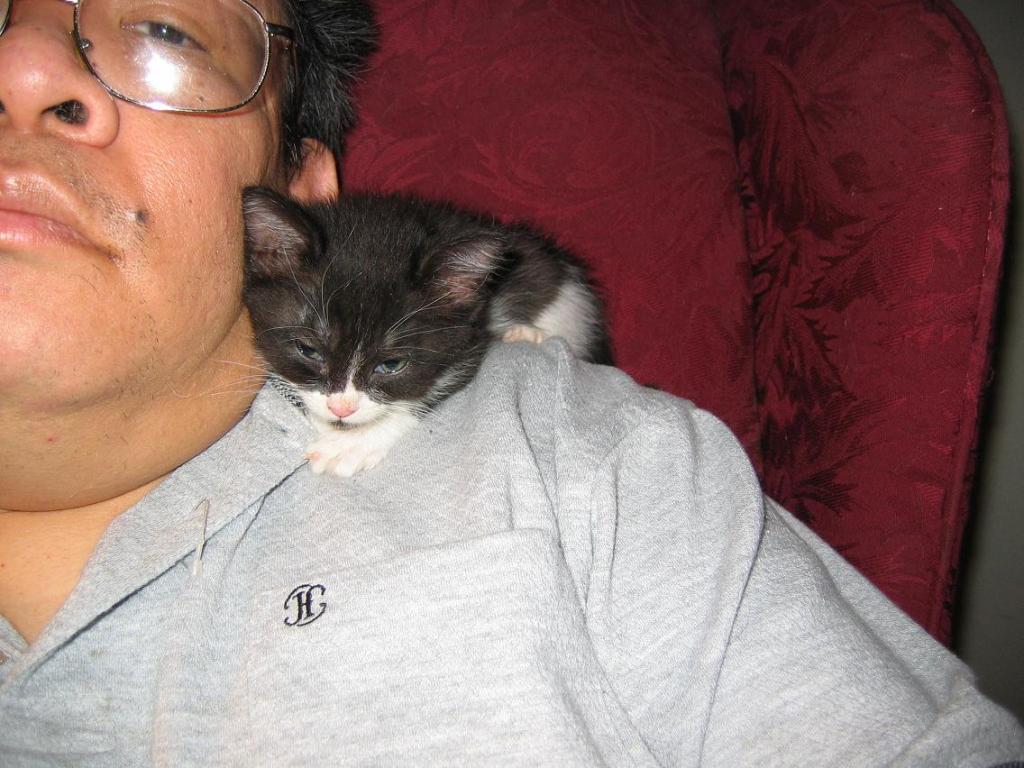
Twenty-six years have passed since I first adopted Bob and Jasper. Both cats have long since crossed the rainbow bridge. Other cats have come and gone.
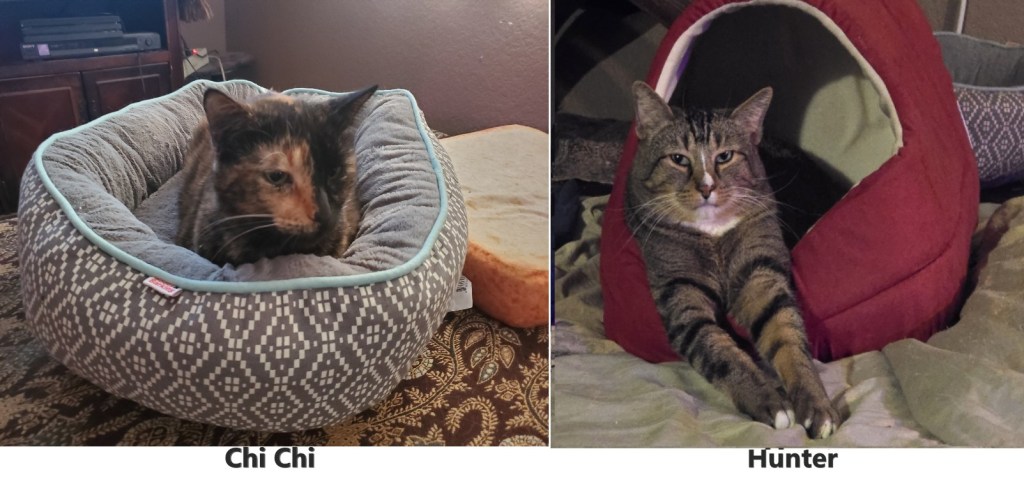
I currently live with Chi Chi, a petite tortoise shell cat and her brother, Hunter, a gray tabby with black tiger stripes.
Have you ever experienced trauma? Did you develop PTSD as a result? Please share your experiences in the reply.




Leave a Reply