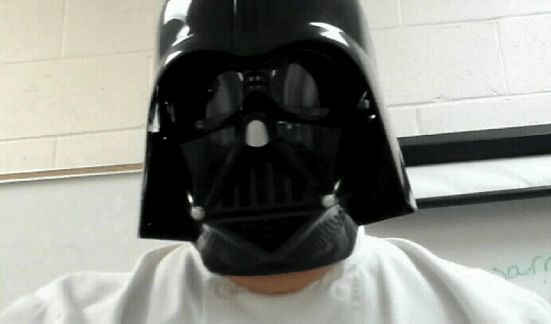
Autistic masking, also known as social camoflaging, is a conscious or sometimes unconscious strategy that some people with autism use to suppress autistic traits while adopting “normal” behaviors. People who mask do so in order to blend in and to gain acceptance, or at least gruding tolerance, from neurotypicals.
For example, long before I knew that I was autistic, I copied the behavior of others to better help fit in. Even though I didn’t like being touched or having to make eye contact, I shook hands and forced myself to at least momentarily make eye contact. Although I didn’t always understand another person’s joke, I joined my classmates in laughing at the punchline. Despite the fact that I had no interest in sports, I “avidly” listened while others bragged about their athletic prowness or excitedly talked about a professional game they saw on television.
Doing this was both physically and emotionally exhausting. The give and take of a conversation that neurotypicals regard as normal was quite stressful for me. It took effort to listen and to know both when and how I was supposed to respond.

It should be noted that masking IS NOT a cure for social awkardness. At best, it’s a crutch. If used too often or for too long without opportunities for quiet downtime to rest and recover; in the short term, prolonged masking can lead to a meltdown or shutdown.
A meltdown is an involuntary emotional loss of control that can occur if the senses of a person with autism are overwhelmed. With too much information to process, a meltdown can result in a scream of frustration or anger. Outwardly this can resemble a temper tantrum.
As with a meltdown, a shutdown is an involuntary response to sensory, emotional, social, or cognitive overload. Instead of reacting outward, a person in shutdown pulls inward to conserve energy by processing less information. During a shutdown, a person’s mind might feel sluggish. The person in question may also feel detached from his or her surroundings. A shutdown can also result in the temporary loss of speech.
How Masking Works
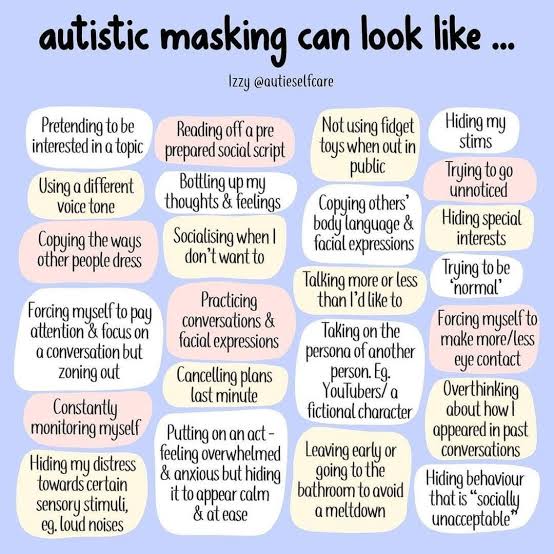
People with autism use several specific tactics during or before social interactions with neurotypical people:
- Mirroring and mimicking: Watching and copying neurotypical body language, facial expressions, gestures, tone of voice, or conversational habits. People often learn these cues from real-life peers, TV shows, movies, or even books.
- Scripting and rehearsing: Planning topics, questions, jokes, or responses ahead of time, or relying on memorized phrases to get through small talk and unstructured conversations.
- Forcing or adjusting social cues: Forcing eye contact even when it feels uncomfortable or distracting, because neurotypical norms often read looking away as disinterest or rudeness.
- Suppressing stimming and sensory distress: Holding back self-stimulatory movements (like hand-flapping, rocking, or pacing) or hiding sensory discomfort, confusion, or overwhelm so others do not notice.
- Hiding or toning down special interests: Holding back deep enthusiasm or detailed knowledge about personal interests to avoid standing out or seeming “too intense”.
- Self-monitoring and people-pleasing: Constantly tracking one’s own words, posture, and reactions during an interaction to avoid social mistakes or criticism.
Summary
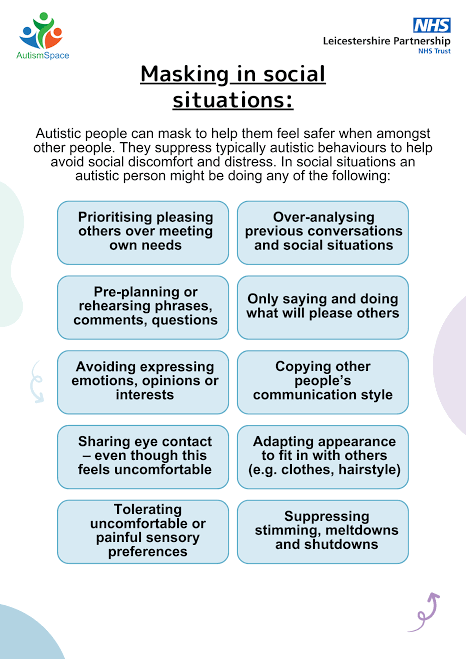
Many autistic people mask to avoid bullying, judgment, exclusion, or social misunderstandings, or to navigate school, work, and daily errands. Since monitoring and adjusting behavior takes heavy ongoing mental effort, masking can lead to deep exhaustion, burnout, anxiety, or feeling disconnected from one’s authentic self.


Leave a Reply