
For those of you who are not familiar with the U.S. healthcare system, Medicare is a federal health insurance program in the United States. It primarily serves people who are 65 or older, as well as for younger people who are already receiving social security disability payments and who also have long term medical conditions.
Medicare consists of four parts:
- Part A (Hospital Insurance): This defrays the cost of inpatient hospital stays, care in a skilled nursing facility, hospice care, and certain types of home health care. Most people do not pay a monthly premium for Part A.
- Part B (Medical Insurance): This defrays the cost of doctor visits, outpatient care, medical supplies (such as wheelchairs and hospital beds), and preventive services. It requires a monthly premium of over $200/month.
- Part C (Medicare Advantage): This is an optional “all-in-one” alternative to Original Medicare offered by private insurance companies approved by Medicare. These plans bundle Part A, Part B, and usually Part D, and often include extra benefits like vision, dental, hearing care, and wellness programs.
- Part D (Prescription Drug Coverage): This is an optional insurance plan run by private companies that helps pay for prescription medications.
Open enrollment to register for medicare runs from October 15 through December 7. There is also a 7-month enrollment window that begins with one’s 65th birthday or the 25th consecutive month of disability benefits.
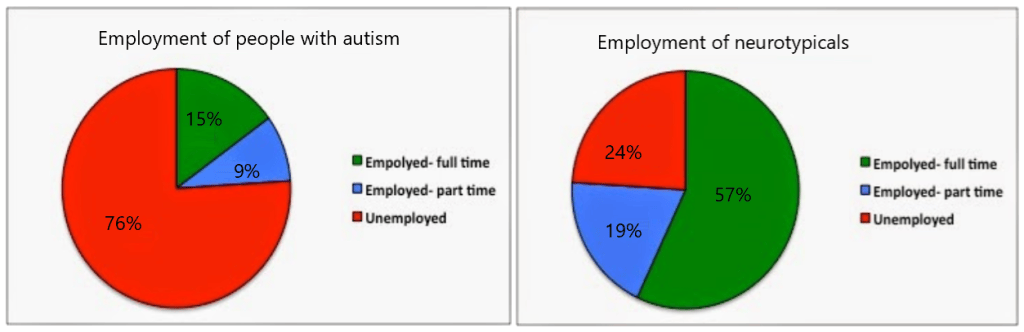
While an estimated 20% of neurotypicals (non-autistic people) are chronic procrastinators, as many as 70% of people with autism have similar issues. The ability to balance working memory, cognifitive flexibility, and self-control; (known as executive function), can inhibit the ability of the neurodiverse to promptly start tasks. This issue has also likely contributed to the high rate of unemployment, (estimated at 75%), for people with autism.
Although I had high executive functioning skills throughout the 32 years I worked as a teacher, following retirement, it felt as though I had never had this ability. In the years that have passed, I have reflected upon this and suspect that a number of factors were in play.
I was depressed having suffered a loss of identity. Since I was no longer a teacher, what was I? I didn’t know. Whereas I had once worn a “uniform” of the day (black skid resistant shoes, black socks, black trousers, and a dark blue polo shirt with my school’s logo embroidered in white upon my upper right chest; the latter of which I would switch out for a white culinary jacket and a white toque after having arrived at work), I was now at a loss for even knowing what to wear.

As with many people on the autistic spectrum, it was challenging for me to transition from one setting to another. I was admittedly unprepared for the switch from employment to retirement.
Whereas employment had come with decades long daily and weekly schedules for everything from writing lesson plans to teaching, guiding, and evaluating student performance; I had no such plan for retirement.
After turning 65 in October, I procrastinated applying for medicare. When I finally went online to apply for this federal insurance, I did so outside the enrollment dates. Since my preferred method of communication with the outside world is through email, I missed seeing a letter from social security about my medicare application. Whereas my need for structure was such that my phone was always turned off unless I needed to use it or was expecting a telephoned appointment, I also missed seeing a voice mail message from social security.
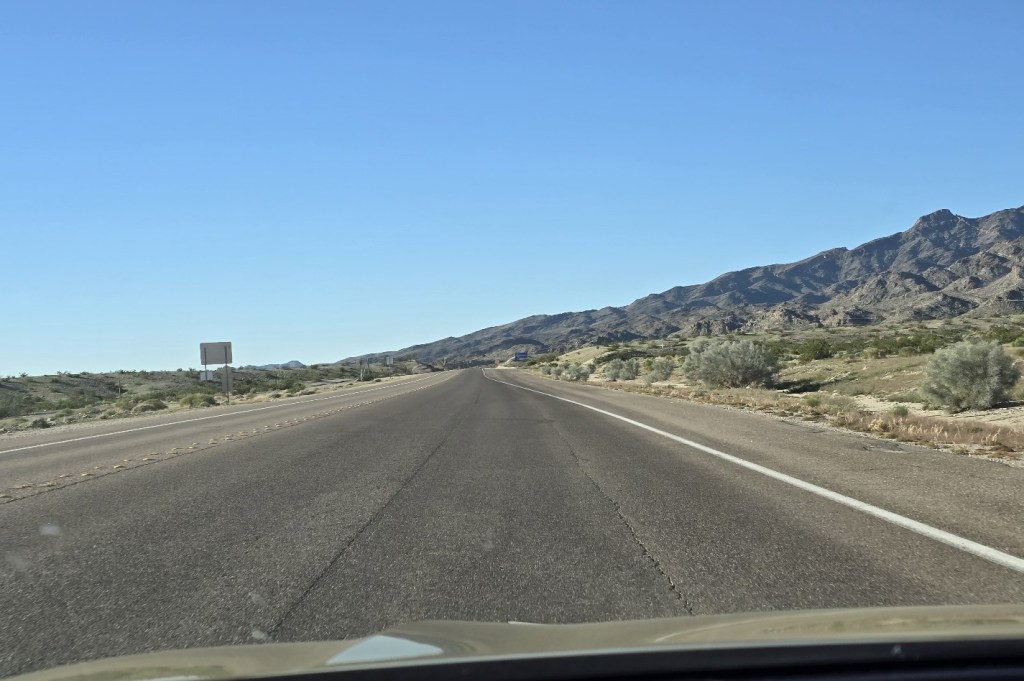
Having developed prostate issues and having become increasingly worried over how my medicare application had stalled; on the morning of November 12, I drove 28 miles from Laughlin to the Social Security Office in Needles, California.
It was a nice drive through the scrubland of the Mohave Desert. The summer’s unpleasant 110°F, (43° C), had given way to a cool and crisp 65°F, (18.3°C). The landscape was intermittently covered with dry perennial grass and gray creosote bushes with pointed olive-green leaves. Neatly trimmed fields of alfalfa hay intermittently appeared off to the left, down by the Colorado River.
Long before the rise of America’s iconic Route 66, Needles was established in 1883 as transcontinental railroad hub for Atlantic & Pacific, Southern Pacific, and Santa Fe railroads, In addition to serving as a transhipment point, this town had once provided critical maintenance and refueling services.
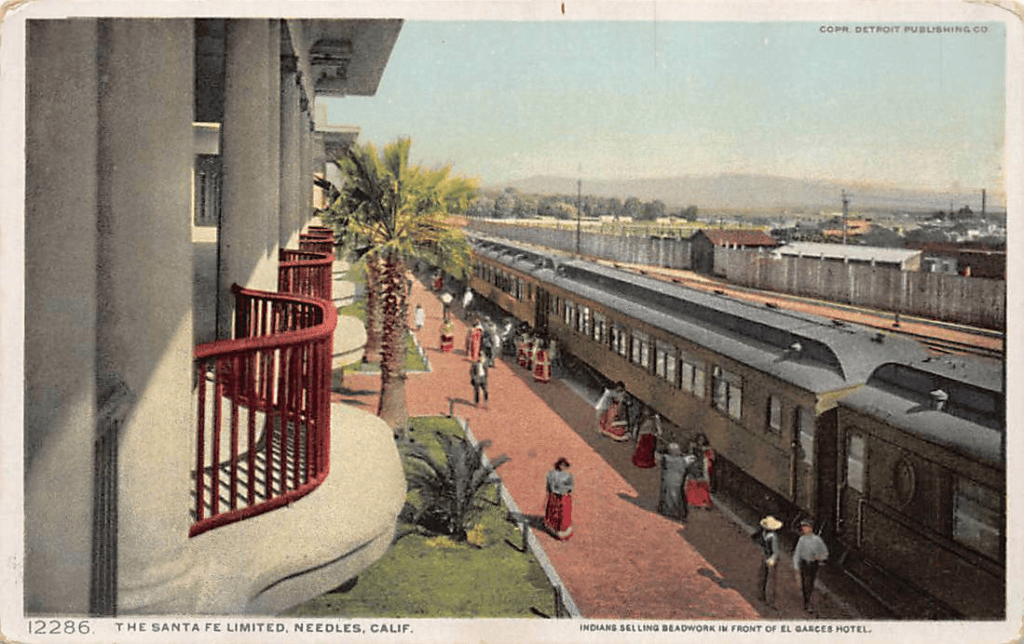
Today Needles remains a railroad town. It is a busy hub on BNSF’s Southern Transcon freight corridor, which connects Southern California with Chicago. Between 60 and 70 freight trains rumble through this town everyday. AmTrack also offers twice daily passenger service for trains running between Los Angeles and Chicago.
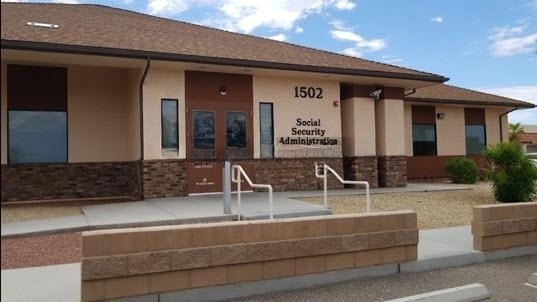
Social Security
Although the social security website strongly encourages appointments, an exception exists for walk-in’s with “dire needs”. Having never previously visited a social security office, I was surprised to find that twenty people were waiting ahead of me when I arrived at 8:50 AM just prior to the office’s 9 AM opening.
A gray uniformed federal security guard by the entrance would later tell me that everyone ahead of me had been a walk-in. “You made a slight miscalculation,” observed the officer after I asked how many of these people had had appointments.
When I raised an eyebrow, the officer continued. “Yesterday was Veteran’s Day, so you’re here the day after a Federal holiday. Daylight Savings time also ended a few days ago, so instead of showing up at 9 AM, a lot of people arrived at eight.”
At my crestfallen look, the officer waved a hand as I accepted a ticket from the queue kiosk . “Don’t worry about it though. Things move pretty quickly and you shouldn’t have more than an hour of wait time.”
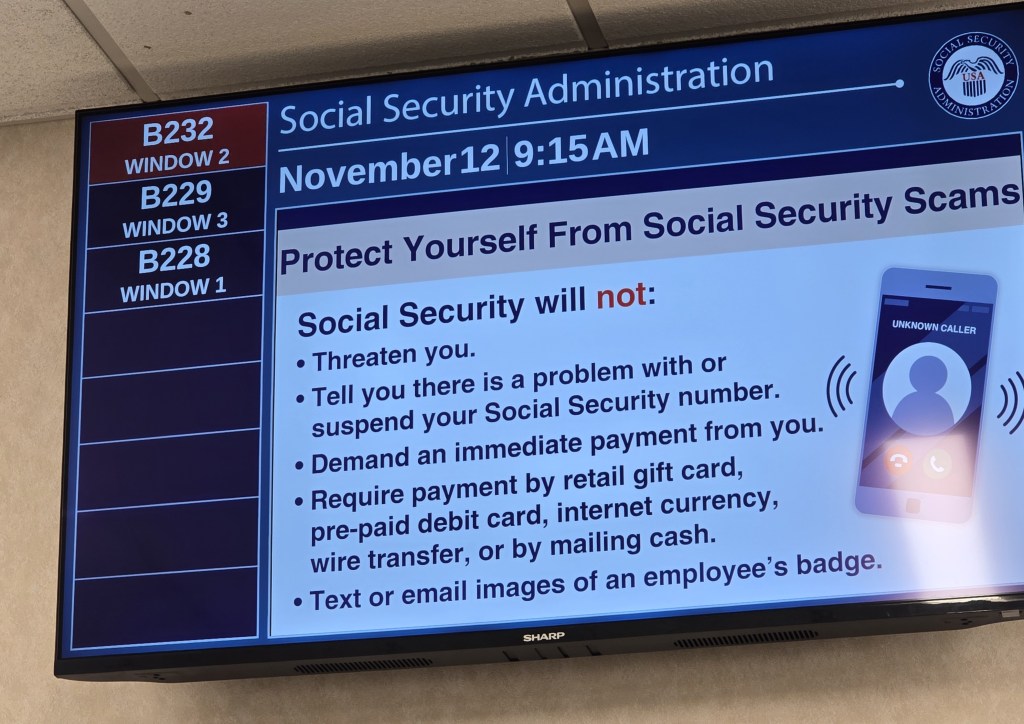
True to his word, the electronic prompter called me to window 1 just 45 minutes later. After having asked for my photo ID as well as a brief summary as to why I had come to the social security office, an older female clerk typed on her keyboard and frowned at the results that were displayed on her monitor.
“Where were you born?” she finally asked.
I told her that I had been born in San Francisco.
She frowned again. I would soon learn that I had somehow entered “Laughlin” as my birthplace instead of “San Francisco”.
“According to our records, we sent you a letter about this on October 1st. When we didn’t hear back from you, we tried phoning; but your voicemail was full.”
With a few more clicks of her keyboard, the woman smiled. “There,” she exclaimed with satisfaction. “I’ve updated your application. You should receive your medicare card within 3-5 business days.”
After stammering my thanks, the woman waved me off. To celebrate having finally been enrolled with Medicare, Parts A and B, I took myself to Chili’s in Bullhead City for lunch.
Are you currently receiving Medicare and/or Social Security payments? What has your experience been like?



Leave a Reply